
 01
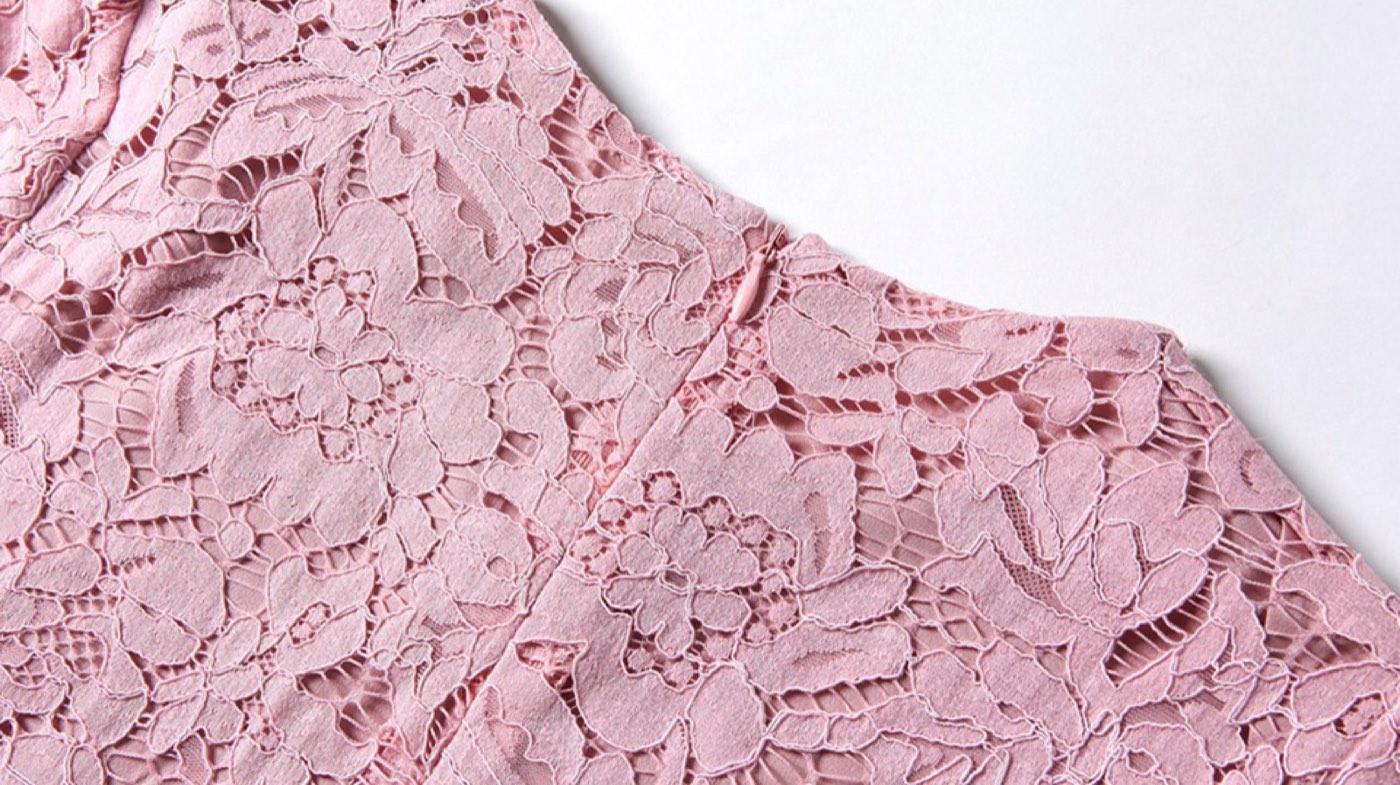
01 / Soft relief
Chemical / water-soluble lace
A soluble ground is dissolved away after stitching, leaving a soft, slightly elastic lace with shine, depth and a wide range of motifs.
The raw materials decide almost everything. Nylon, polyester, cotton and rayon form the ground; spandex or stretch yarn add the recovery a neckline edge needs. We choose the lace after the garment, never before.
Craft 07Each family below carries its own edge behaviour and care rules — the notes are the ones we give buyers when a style moves from sample to bulk.
01A soluble ground is dissolved away after stitching, leaving a soft, slightly elastic lace with shine, depth and a wide range of motifs.
 02
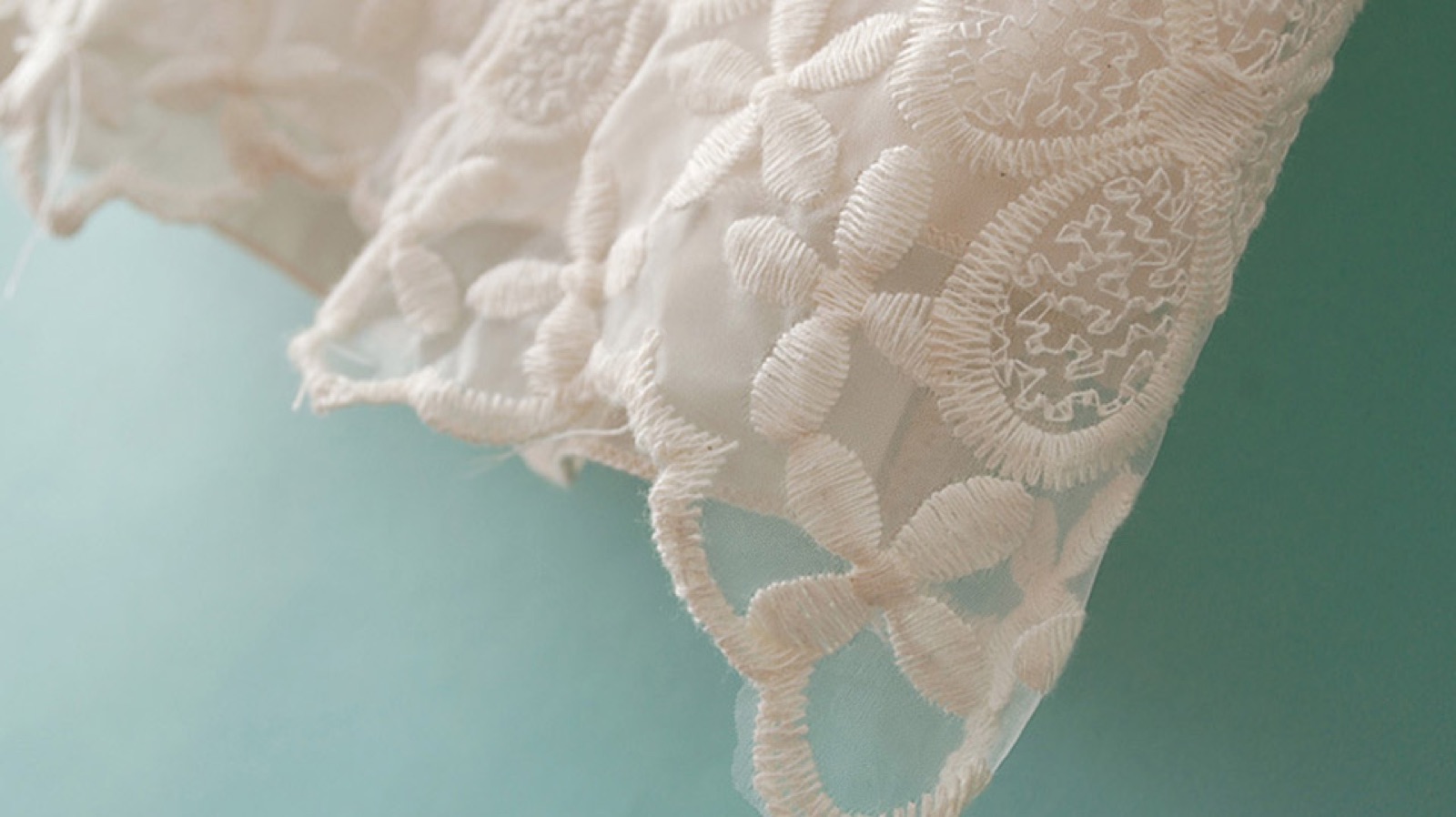
The workhorse for volume: inexpensive, wide pattern choice, many colours and resistant to breaking — but firmer against the skin.
 03
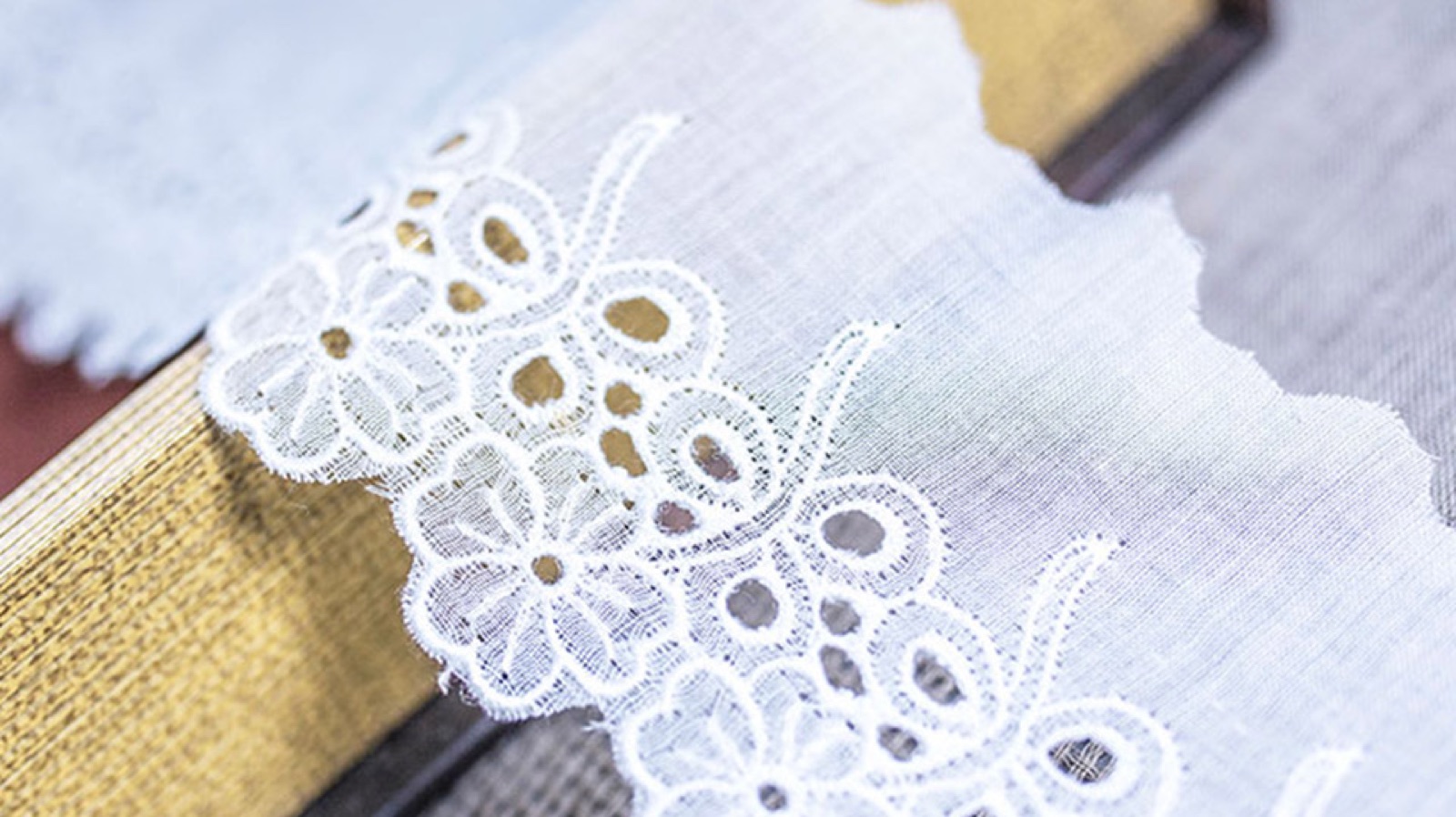
Cheap, strong and happy under a hot iron, with a comfortable hand. The trade-off is a narrower style range, mostly white.
 04
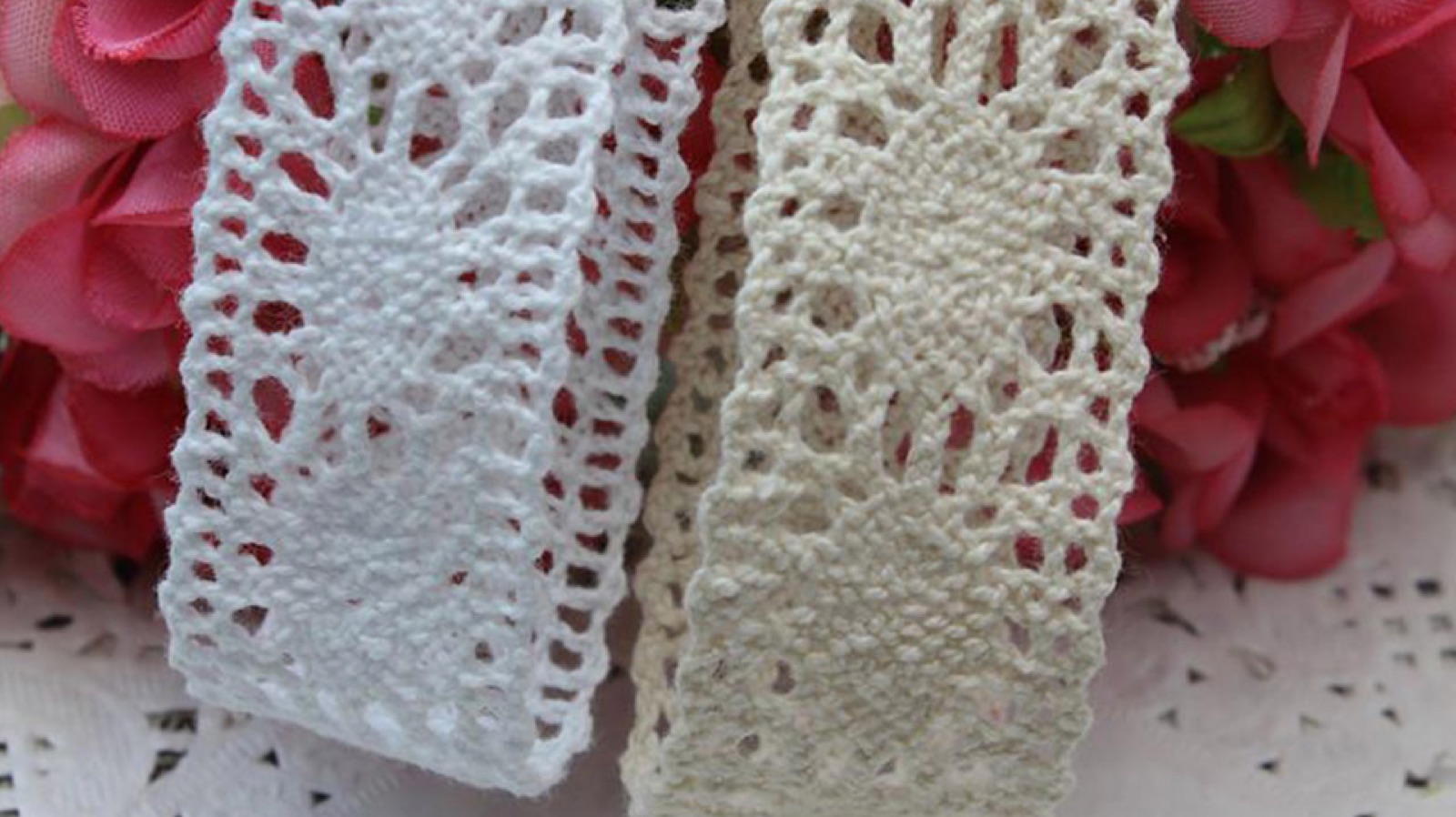
A cotton-thread ground that resists creasing well and keeps its shape through washing, at a slightly higher cost and heavier weight.
 05
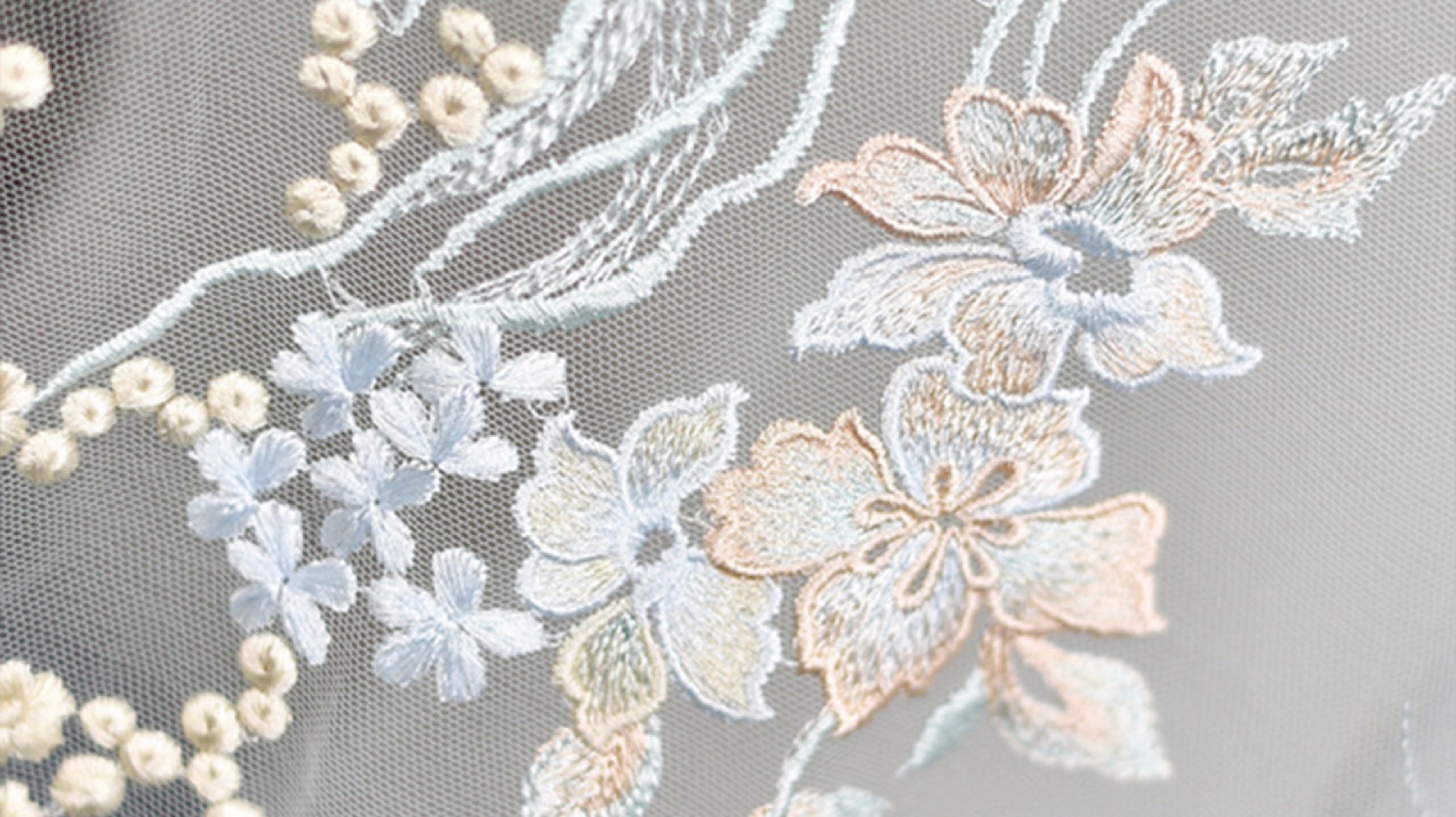
Embroidered directly onto a fine mesh — soft, crease-resistant, foldable and elastic, with fewer shapes and a lower heat tolerance.
A lace edge fails at the seam long before it fails in the wash. We cut, line and finish to the panel it sits on, then test the join on the actual fabric.
A lace edge fails at the seam long before it fails in the wash. We cut, line and finish to the panel it sits on, then test the join on the actual fabric.

Bring us the ground fabric first: lace is chosen against it, not in isolation.
Send your ground fabric and the edge you have in mind. We will propose two or three lace families with cost, hand-feel notes and a sampling window.